Thursday, March 14, 2019

Orang Papa

Orang Papa


DEFINISI / KONSEP
Konsep Gelandangan
  • Individu atau sekumpulan orang yang bukan sahaja tidak mempunyai pekerjaan atau tempat tinggal tetapi mereka juga hilang kefungsian sosial
  • Mereka yang tunawisma (mempunyai tempat tinggal atau rumah yang tetap) biasanya disifatkan sebagai tiada tempat tinggal yang tetap, selamat dan lengkap
  • Mereka biasa bermalam di kaki lima, pondok sementara atau kediaman yang seumpamanya
  • Dikenali sebagai Homeless (dalam Bahasa Inggeris)

Definisi Orang Papa berdasarkan Seksyen 2, Akta Orang Papa 1977 (Akta 183)
  • seseorang yang mengemis di tempat awam hingga menimbulkan kegusaran atau mengganggu orang ramai yang biasa mengunjungi tempat tersebut
  • seseorang peleser yang dijumpai di tempat awam, sama ada ia mengemis atau tidak, yang tiada mata pencarian pada zahirnya atau tiada tempat tinggal atau tidak dapat menyatakan hal dirinya dengan memuaskan.
 FAKTOR KEWUJUDAN ORANG PAPA
1. Kehilangan punca pendapatan atau pendapatan mereka rendah
  • Mereka yang berpendapatan rendah tidak berupaya untuk memilik atau menyewa tempat tinggal / kediaman
  • Kos sara hidup adalah tinggi terutamanya di kawasan bandar
  • Mereka yang menganggur tidak berupaya untuk menanggung kos sara hidup yang tinggi

2. Faktor kesihatan 
 
  • Mereka menghadapi penyakit kronik seperti diabetes, asthma, kanser
  • Sebahagian daripada mereka juga menghadapi penyakit mental seperti tekanan jiwa dan gangguan keperibadian paranoid
  • Gangguan keperibadian paranoid: takut, curiga dan tidak percaya yang tidak terhenti terhadap orang lain

3. Kelemahan fizikal
  • Kebanyakan orang papa merupakan orang tua / warga emas
  • Dianggap sebagai beban kepada keluarga dan ditinggalkan oleh keluarga mereka
  •  Sebahagian daripada mereka dieksploitasi oleh majikan mereka (tidak dibayar pencen selepas bersara)
  • Mangsa keganasan rumah tangga
4. Ketidakstabilan Politik
  • Peperangan dan perebutan takhta dalam sesebuah negara telah menyebabkan ketidakstabilan politik
  • Ketidakstabilan politik telah menyebabkan kegiatan ekonomi terbantut dan meningkatkan kadar kemiskinan
  • Rakyat terpaksa melarikan diri ke negara lain untuk kelangsungan hidup
  • Larian / banduan terpaksa mengemis untuk mendapatkan punca pendapatan 
  • Mereka hanya boleh tinggal di kawsan setinggan atau merata tempat

CADANGAN DAN PENYELESAIAN JKMM – DESA BINA DIRI (DBD)

Pengenalan
  • Desa Bina Diri (DBD) ditubuhkan untuk memberi jagaan, perlindungan dan pemulihan kepada pengemis dan orang papa bagi melahirkan individu yang produktif dan berkemahiran ke arah perubahan sikap yang positif untuk diintegrasikan semula ke dalam masyarakat.
Objektif DBD
  • Memberi perlindungan, penjagaan dan pemulihan kepada penghuni yang terdiri daripada golongan papa
  • Melatih penghuni supaya dapat menyesuaikan diri dan dapat di intergrasikan semula ke dalam masyarakat 
  • Melengkapkan diri dengan asas pembelajaran dan kemahiran
Lokasi DBD
Terdapat lima buah DBD di bawah JKM :-
  • DBD Mersing, Johor
  • DBD Jerantut, Pahang
  • DBD Kuching, Sarawak
  • DBD Kota Kinabalu, Sabah
  • Pusat Sehenti Bina Diri Sungai Buloh, Selangor
Syarat Kemasukan DBD
  • Warganegara Malaysia
  • Berumur 18 - 59 tahun
  • Tiada keluarga
  • Tiada pendapatan
  • Tidak menghidap penyakit berjangkit
Kaedah Kemasukan
i) Sukarela
Permohonan kemasukan diproses mengikut kaedah-kaedah (Rumah Kebajikan) Orang-Orang Papa 1981

ii) Perintah Mahkamah 
Kemasukan adalah atas perintah Mahkamah mengikut Peruntukan Akta Orang Papa 1977

KESIMPULAN
  • Orang papa merupakan satu fenomena yang disebabkan oleh ketidakfungsian sosial dalam sistem sosial
  • Fenomena ini telah mencemarkan pemandangan dalam negara kita khususnya di bandar-bandar besar seperti Kuala Lumpur, Georgetown, Melaka dan sebagainya
  • Sehubungan dengan itu, fenomena ini secara tidak langsung telah menjejaskan reputasi dan imej negara kita dengan memberi indikator yang negatif kepada seluruh dunia bahawa Malaysia merupakan sebuah negara yang kegiatan ekonominya terbantut
  • Langkah yang lebih menyeluruh perlu direalisasikan oleh kerajaan kita dengan menetapkan gaji minimum yang lebih tinggi, menyediakan lebih banyak peluang pekerjaan serta memperketatkan undang-undang imigresen untuk menghalang kebanjiran orang pelarian.

Stroke

Stroke

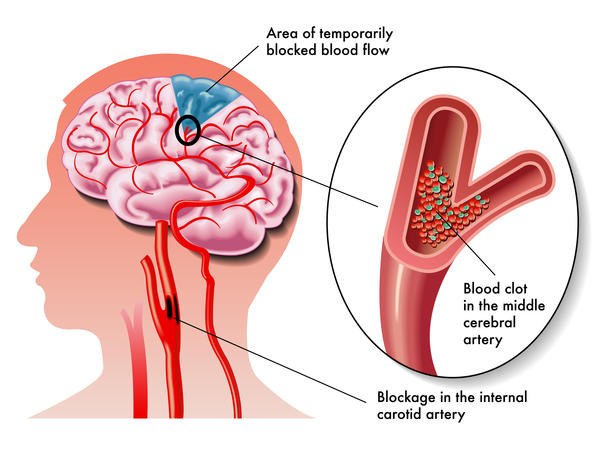
A stroke or brain attack is a medical emergency that occurs when the blood supply to the brain is disrupted. Strokes are the third most common cause of death in Malaysia and many people live with long-term disability as a result of a stroke. This condition is more common later in life and is more common later in life and is associated with disorders of the circulatory system, such as high blood pressure.

The majority of strokes are caused by a clot in a blood vessel that blocks the flow of blood to part of the brain. However, some strokes are the result of a ruptured blood vessel that causes bleeding into the brain. If a stroke is due to a blood clot, it may brain and improve recovery.

CAUSES OF STROKE
1. Cerebral Thrombosis
  • Blockage in arteries supplying oxygenated blood will result in damage to affected parts of the brain
相關圖片

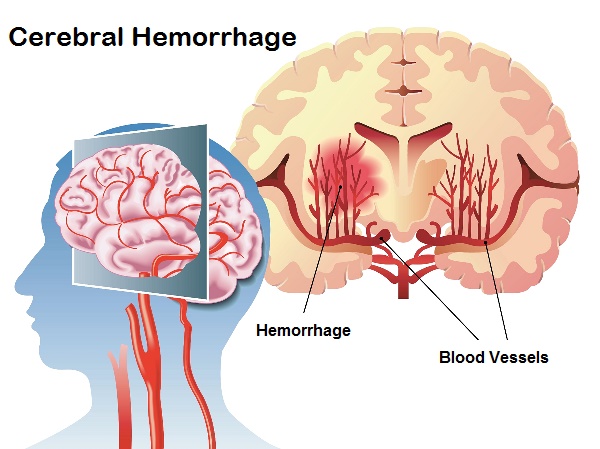
2. Cerebral Haemorrhage

  • A weakened area of an artery ruptures. This results in an area of the brain being deprived of oxygenated blood and pooling of blood causing increased pressure on the brain, displacing tissues and interfecting with function. Cerebral haemorrhage is often associated with arteriosclerosis and hypertension.
「Cerebral Haemorrhage」的圖片搜尋結果


SYMPTOMS AND SIGNS
  • Headache
  • Confusion / dizziness
  • Loss of function or paralysis of extremities (usually on one side of body)
  • Numbness (usually limited to one side of body)
  • Collapse
  • Facial flaccidness and loss of expression (often to one side of face0
  • Impaired speech
  • Unequal pupil size
  • Impaired version
  • Rapid, full pulse
  • Difficult breathing, snoring
  • Nausea
  • Convulsions
  • Coma
  • Loss of bladder and bowel control
EMERGENCY CARE OF STROKE PATIENT
  • Maintain open airway
  • Minimize brain damage
  • Arrange urgent removal to hospital as soon as possible
WHAT TO DO
  1. Look the casualty's face. Ask him to smile: if he has had a stroke he may only be able to smile on one side - the other side of his mouth may droop.
  2. Ask the casualty to raise both his arms: if he has had a stroke, he may only be able to lift one arm.
  3. Find out whether the person can speak clearly and understand what you say. When you ask a question does he respond appropriately.
  4. Call 999 for emergency help and tell ambulance control that you have used the FAST guide and you suspect a stroke.
  5. Keep the casualty comfortable and supported. If the casualty is conscious, you can help him to lie down. Reassure him that help is on its way.
  6. Regularly monitor and record vital signs - breathing, pulse and level of response while waiting for help to arrive. Do not give the casualty anything to eat or drink because it may be difficult for him to swallow.
FAST (Face-Arm-Speech-Time)
Use the FAST (Face-Arm-Speech-Time) guide if you suspect a casualty had a stroke:
Face weakness : the casualty is unable to smile evenly and the mouth or eye may be droopy
Arm weakness : the casualty is only able to raise one of his arms  
Speech problems : the casualty is unable to speak clearly or may not understand the spoken word
Time to call 999 for emergency help if you suspect that the casualty has had a stroke


MANAGEMENT
Conscious Patient

  • Lay casualty downs with head and shoulder slightly raised
  • Incline head to one side
  • Place towel to absorb any dribbling
  • Keep patient calm
  • Administer high concentration of oxygen
  • Monitor vital signs
  • Loosen constricting clothing that might interfere with breathing
  • Transport in semi-reclined position
  • Give nothing by mouth
  • Treat for shock
  • Sit in front of patient, keep eye contact and speak slowly and clearly
Unconscious Patient
  • Maintain open airway
  • Check breathing, pulse and level of responsiveness
  • Resuscitate if necessary
  • Provide high concentration of oxygen
  • Monitor vital signs
  • Transport in lateral recovery position
  • Keep affected limbs underneath patient, use protective padding

Burns and Scalds

Burns and Scalds

These are injuries caused by extremes of temperatures (heat or cold), chemicals or radiation. Burns caused by 'moist' heat such as steam or hot liquids are called scalds.

CAUSES OF BURNS AND SCALDS
A burn is caused by:
  • Dry heat (fire or hot objects)
  • Electrical burn (contact with electrical current or by lightning)
  • Friction (from a revolving wheel or fast moving rope)
  • Chemical burn (strong acids or alkalis)
  • Intense cold (liquid oxygen, liquid nitrogen and extremely cold metals)
  • Radiation (exposure to sun or radioactive substances)
A scald is caused by:
  • Moist heat (hot liquid or steam)

EXTENT OF BURNS
The Rule of Nines
  • The diagram divides the body surface into areas of nine percent. Any injury of an equivalent area will require hospital treatment. Any burn larger than 2 cm - 3 cm (1 inch) diameters requires medical attention.
「rules of nine」的圖片搜尋結果

LEVEL OF BURNS
「superficial burn」的圖片搜尋結果

Superficial burns (First Degree Burn)
  • These burns involve only the outer layers of skin and results in general redness, swelling and extreme tenderness. This type of burn usually heals well.
Intermediate burns (Second Degree Burn)
  • These burns involve the formation blisters which may be intact of broken with an area of surrounding redness. Intermediate burns may become infected so you should seek medical aid.
Deep burns (Third Degree Burn)
  • These burns involve all layers of skin. The skin may be appearing pale, waxy and sometimes charred. Because the nerve-endings are damaged, these burns are relatively pain-free. Deep burns always require medical attention.

SYMPTOMS AND SIGNS
  • Severe pain at the injury
  • Reddening of the skin
  • Sometimes blistering
  • There may be destruction of skin (charring)
  • Shock
WHAT TO DO
  1. Start cooling the injury as soon as possible. Flood the burn with plenty of cold water but do not delay the casualty's removal to hospital. Help the casualty to sit or lie down. If possible, try to prevent the burnt area from coming into contact with the ground to keep the burn as clean as possible.
  2. Call 999 for emergency help. If possible, get someone to do this while you continue cooling the burn.
  3. Continue cooling the affected area for at least 10 minutes or until the pain is relieved. Watch for signs of breathing difficulty. Do not over-cool the casualty because you may lower the body temperature to a dangerous level, causing hypothermia. This is a particular hazard for babies and elderly people.
  4. Do not touch or otherwise interfere with burn. Gently remove any rings, watches, belts, shoes and burnt or smouldering clothing before the tissues begin to swell. A helper can do this while you are cooling the burn. A helper can do this while you are cooling the burn. Do not remove any clotthing that is stuck to the burn.
  5. When the burn is cooled, cover the injured area with kitchen film to protect it from infection. Discard the first two turns from the roll and then apply it lengthways over the burn. A clean plastic bag can be used to cover a hand or foot; secure it with a bandage or adhesive tape applied over the plastic, not the damaged skin. If there is no plastic film avaible, use a sterile dressing or improvise with non-fluffy material, such as a folded triangular bandage.
  6. Reassure the casualty and treat him for shock if necessary. Record details of the casualty's injuries. Monitor and record his vital signs - breathing, pulse and level of response while waiting for help to arrive.
CAUTION
  • Do not remove anything sticking to the burn; you may cause further damage and introduce inflection into the burnt area
  • Do not burst any blisters
  • Do not apply any type of lotion or ointment to the burnt area: it may damage tissues and increase the risk of inflection
  • The use of specialised dressings, sprays and gels to cool burns is not recommended
  • Do not use adhesive dressings or apply adhesive tape to the skin; a burn may be more extensive than it first appears
  • If the casualty has a burn on his face, do not cover the injury; you could cause the casualty distress and obstruct the airway.
  • Do not allow the casualty to eat or drink because he may need an anaesthetic

Calligraphy

Calligraphy

Calligraphy is the traditional art of writing Chinese characters. Calligraphic arts are based on the square structure and lines of Chinese characters. The Chinese people embodied their philosophy of the beauty of shapes into the invention of Chinese characters. With balanced structure and smooth, clean and changeable form, each Chinese character evokes a sense of artistry. 

Calligraphic works pay more attention to the structures of script types; for example, the component parts, size and spacing of a Chinese character should be harmonious and natural and the spaces between words and lines should also be carefully arranged. Another notable characteristic of Chinese calligraphy is the use of brush pens and Chinese ink. Brush pens are soft and elastic; in writing, the thickness and thinness of the tip of brush pens and the ink can present artistic features.

Common styles of Chinese calligraphy include seal, official, regular, cursive and semi-cursive (running) scripts. Different calligraphic styles have varying structural, features round and smooth lines that retain the same width, showcasing the aesthetic effect through calligraphic curviness; the strokes of lishu script are undulate and vary markedly in width and strength; regular script is square and neat; cursive script has continuous, dance-like strokes and is thus lively and vigorous; the word 'running' in 'running script' suggests 'speediness', so semi-cursive script is not as neat as regular script, nor is it so illegible as cursive script, presenting a sort of convenient handwriting. Among all these scripts, regular script and semi-cursive script are the most frequently used and regular script is the very foundation of the exercise of calligraphy.

Each master, after years of hard practice, formed a unique calligraphic style and school to raise the profile of Chinese calligraphy to a towering level. There is some famous calligraphers in the history of China:-

  • Zhong Yao (There Kingdoms Period)
  • Wang Xizhi ( Eastern Jin Dynasty)
  • Ouyang Xun (Tang Dynasty)
  • Huaisu (Tang Dynasty)
  • Yan Zhenqing (Tang Dynasty)
  • Liu Gongquan (Tang Dynasty)
  • Su Shi (Song Dynasty)
  • Zhao Ji, The Emperor of Huizong(Song Dynasty)

「a cursive script by huai su」的圖片搜尋結果
A cursive script by Huai Su
「the original handwriting of The Preface to Lanting」的圖片搜尋結果
The original handwriting of The Preface to Lanting

Xiangqi (Chinese Chess) and Weiqi (Go)

Xiangqi (Chinese Chess) and Weiqi (Go)


Xiangqi (Chinese Chess) originated in China and the name 'xiangqi' dates back the Warring States Period more than 2000 years ago, although at that time xiangqi was quite different from today. Since that early time it has been a popular game among the high rank of society.

In the middle of a chessboard there is a border separating the two sides, which is called the 'River-Border' or the 'Chuhe River and Han Border'. This name may stem from the legend that Chinese chess was invented by Han Xin, a strategist living in the period when Chu and Han were at war against each other. It is said that Han Xin invented xiangqi to teach his men the art of war during their leisure time. The xiangqi with the 'River-Border' known today first appeared in the Northern Song Dynasty and the one without the River-Border belonged to its predecessor.

On the chessboard of xiangqi, 9 parallel vertical and 10 parallel horizontal lines intersect with each other, forming 90 intersections, where the chess pieces of xiangqi are placed. The places with slant lines at the points are called 'jiugong'. There are altogether 32 chess pieces, which are divided into two groups. Characters carved on the pieces are painted red or black to represent the two sides. Each side has a 'marshal' or a 'general', two 'guards', two 'elephants', two 'horses', two 'chariots', two 'cannons' and five 'soldiers'. At the start of a match, all pieces must be placed in fixed positions, and the red side moves first. Each piece has its unique move, for example, a 'horse' moves diagonally from one position to another, a move which is traditionally described as being like the Chinese character 日(ri in pinyin), a 'elephant' may move orthogonally and is limited to nine positions in the middle part at the bottom, which forms a pattern of the Chinese character 田 (tian in pinyin), a chariot can move any distance orthogonally so long it does not jump over intervening pieces, and a 'soldier' can move forward only.

When the 'general' or 'marshal' of one side is checked and might be eaten off in next move, it called 'jiangjun' or simply 'jiang'. When the side that is checked finds no way to save himself, he has been checkmated. In another case, one side finds no way to move his 'general' or 'marshal' although he is not checked by other side, and nor can he any remaining chessman, then he has also lost. Sometimes no side wins, ending the game in a stalemate.

WEIQI (GO)

「weiqi」的圖片搜尋結果

Weiqi (go) orginisated in China. It appeared earlier than Chinese chess, and could date back at least 2500 years. Go is the earliest form of chess in the world. In ancient days, it was a favorite game both of rulers and ordinary people. The board is marked with 19 parallel horizontal lines and 19 parallel vertical lines, forming 361 intersectiona upon which stones are placed. Each of two sides, one with black stones and the other with white stones, possesses 180 of them. It is an intense and ever-changing game. Players must resort to a variety of tactics in order to defeat their opponent. Tactics used in the game are so variable and complex that ancient Chinese said in an exaggerated manner that the inventors of go must have been deities. In the Tang Dynasty, there was a famous player named Wang Jixin, whose skill in playing go was extraordinary to such a degree that it was said he had once been instructed by a deity.

Weiqi is a strategic game. With simple rules and enormous possibilities, it features the myriads of changes, more complicated and profound than other styles of chess. That is where the charm of weiqi lies. The playing of weiqi is greatly helpful in improving one's brain power, increasing his calculation skills, as well as the ability in creation, thinking and judgment. It also helps to develop one's willpower and composure. The playing of weiqi can play a positive role in children's intelligence development and enhance their analytical ability.

Go was introduced into Japan during the Sui (581-618 AD) and Tang (618-907 AD) Dynasties and into Europe in the 19th century. Today, this game is played in many countries and regions, and players from China, Japan and South Korea are of the highest skill in the world.

Four Treasures of Study in Ancient China

Four Treasures of Study in Ancient China


In ancient China, brush pens, Chinese ink, paper and ink stone were four necessary tools in writing or painting. In the Song Dynasty, the began to be called ''four treasures of study''. They are stationary for practical uses, but as exquisite products, they can often be viewed as craft works and listed into the collection. The ''four treasures of study'' have a great number of varieties, and the best-known ones are Chinese brush of Huzhou, ink stick of Anhui, paper of Xuancheng and ink stone of Duanzhou.

1. Brush pen
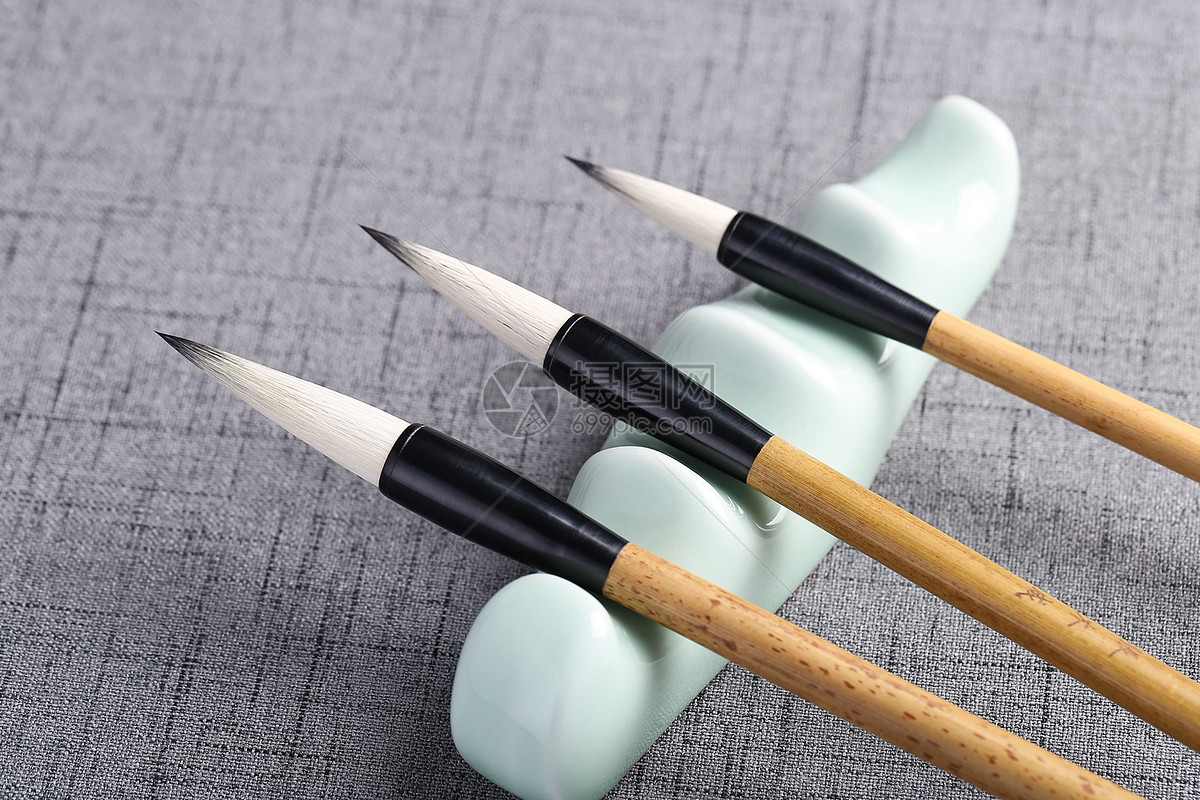
Brush pens have the longest history among the ''four treasures of study'' and are made primarily of small bamboo pipes and hair from beasts. Those made of the hair of goats, hares and weasels are most commonly seen, and are respectively called ''yanghao'' (goats' hair), ''tuhao'' (hares' hair) and ''langhao'' (weasels' hair). Brush pens manufactured in Huzhou of Zhejiang Province are made of carefully selected hair and the tips of the pens are prefectly round and even. Therefore, they are flexible and springy in use.

相關圖片


2. Chinese Ink
Chinese ink sticks are typically made of the soot of pines. When producing pine soot ink, pine wood is lit but prevented from fully burning. In this way, it will emit black soot which later turns into very tiny black powder after it cools down. The ink sticks produced in Shexian County of Anhui Provinece have enjoyed a good reputation since the Tang and Song Dynasties. The top quality pine wood and spring water in this area provide the best raw materials for the production of Chinese ink sticks. The ink stick of Anhui is hard and emits fragrance and feels smooth in writing.

「中国墨汁」的圖片搜尋結果


3. Xuan Paper
Xuan paper is produced in Jingxian County of Anhui and other places. Xuan paper is white, refined, even, soft, resilient and absorbent and does not change in color. As the material of writing and painting. Xuan paper is more age-resistant than silk and can be preserved for a long time without fading in colour. Many ancient calligraphic works and traditional Chinese paintings, including the Five Oxen painted by Han Huang of the Tang Dynasty and housed by the Imperial Palace Museum of Beijing, have been painted on Xuan paper. It deserves its reputation of ''endurance for thousands of years".
「宣纸」的圖片搜尋結果

4. Ink Stone
As tools for grinding ink sticks, ink stones are made of jade, raw lacquer, pottery, stones, copper, iron and so on and mainly of stones. In China, there are four most famous kinds of ink stones, namely Duan ink stones, She ink stones, Tao ink stones and Chengni ink stones. The former three are made of stones and the last is made of pottery. Duan ink stones are produced in Zhaoqing, Guangdong Province. They have abundent textures, feel warm and moist like jade and do not harm the hair of brush pens and the ink ground with them does not easily dry up. She ink stones are produced in Shexian County, Anhui, appearing beautiful and elegant in shape.

Four Great Classical Novels

Four Great Classical Novels

Literary creation flourished during the Ming and Qing dynasties and it was in this period that the four great Chinese classical novels were written, namely the Romance of Three Kingdoms, the Outlaws of the Marsh, the Journey to the West and A Dream of Red Mansions.

相關圖片

1. The Romance of Three Kingdoms
The Romance of the Three Kingdoms was originally named as the Popular Historical Novel Bansed on a Folk Version of the Records of The Three Kingdoms, is a renowned historical novel. Luo Guanzhong, the author of this book, based his novel on both folk tales and historical records of the conflicts between the kingdoms of Wei, Shu and Wu (220-235), established by Cao Cao, Liu Bei and Sun Quan respectively. Written in the early Ming Dynasty, it was the first historical novel in the form of captioned chapters to appear in China. In the novel, the author successfully created a number of impressive characters with varying dispositions, such as Zhuge Liang (a superb strategist), Cao Cao (the cunning and suspicious), Guan Yu (loyal and brave), Zhang Fei (rash and reckless) and etc.


2. The Outlaws of the Marsh
The Outlaws of the Marsh which occurred almost at the same time as the Romance of the Three Kingdoms, was written by Shi Nai'an. It is based on the folk tales following a band of rebels led by Song Jiang at the close of the Northern Song Dynasty. The novel is themed with 'mass revolts caused by oppressive officials'. It describes 108 heroes and heroines, discloses official corruption and feudal oppression and eulogizes the daring deeds of the heroes and heroines who eliminated tyrants and appeased kind people.


3. The Journey to the West
The Journey to the West was authored by Wu Cheng'en of the Ming Dynasty, is a mixture of the true story of a Tang Dynasty monk who made a perilous overland trip to India to fetch Buddhist scriptures and the pertinent folklore based on it. The novel tells how Sun Wukong (Monkey King) who once created a tremendous uproar in the Heaven Palace, escorts his master, the Monk of Tang to fetch Buddhist scriptures from the Western Heaven. According to the novel, they experienced 81 tests on the journey before finally obtaining the authentic scriptures. The novel features rich imagination, wonderful stories and vivid language. It is a renowned mythic full-length novel of China.

相關圖片


4. A Dream of Red Mansions
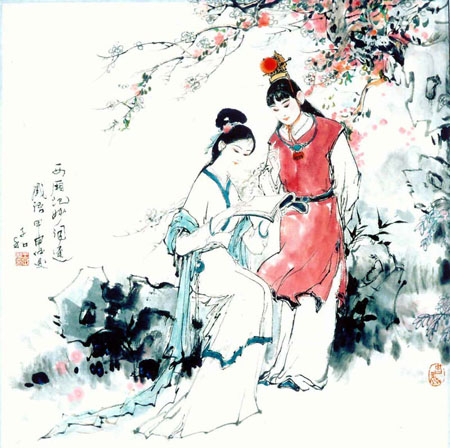
A Dream of Red Mansions also named as A Tale of the Rock has 120 chapters. The first 80 chapters were written by Cao Xueqin and the remaining 40 chapters were written by Gao E. With the tragic love story of Jia Baoyu and Lin Daiyu as the main theme, the novel describes the decline of four feudal noble families especially the Jia family. The novel discloses the illness of feudal rulers and reveals the doomed fate of feudal dynasties. It is the best paragon for the combination of artistic accomplishment and literary themes among all classical full-length novels in ancient China and a masterpiece of realistic literature of China.

相關圖片

The Four Great Classical Novels and other outstanding works during the period reflected the social reality of that time.

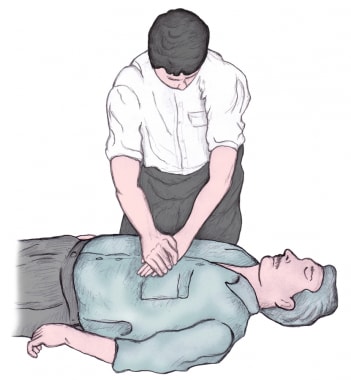
Cardio-Pulmonary Resuscitation (CPR) - Part 1: Introduction

Cardio-Pulmonary Resuscitation (CPR) - Part 1: Introduction CARDIO-PULMONARY RESUSCITATION (CPR) Cardio-Pulmonary Resuscitation (CPR...