Showing posts with label Ancient Chinese Civilization. Show all posts

Thursday, March 14, 2019

Unique Therapies in Traditional Chinese Medicine

Unique Therapies in Traditional Chinese Medicine

ACUPUNCTURE AND MOXIBUSTION THERAPY
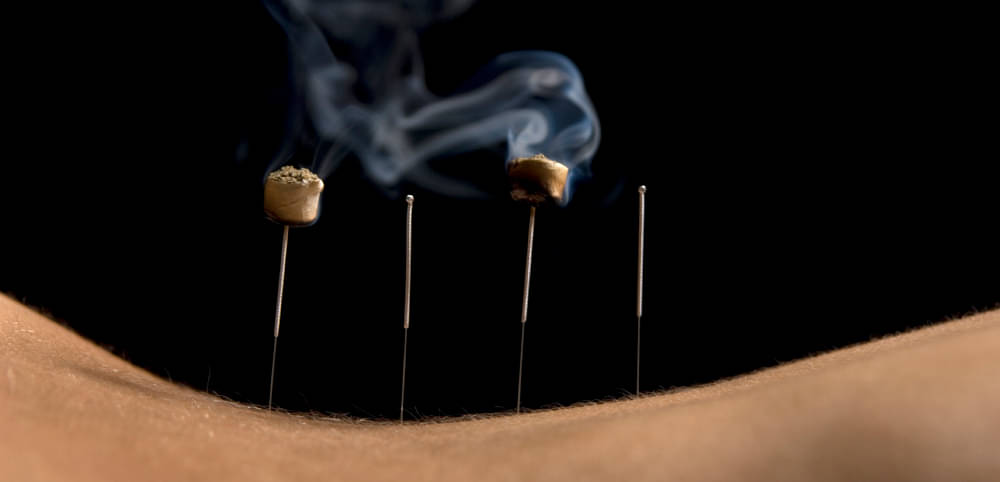
  • Acupuncture and moxibustion therapy has a history of thousands of years. The acupuncture and moxibustion therapy involves the use of jabbing with needles and the placement of burning crushed dry moxa. In acupuncture therapy, specially made needles are used to jab into certain acupuncture points of the body of a patient, curing diseases by twirling or lifting the needles.
  • As for moxibustion, dry moxa is crushed and then lit up to fume and scorch certain acupuncture points on the skin, curing diseases by the stimulation of heat.
  • The acupuncture and moxibustion originated sometime around the New Stone Age and began to be widely used during the Spring and Autumn Period
  • The rationale for acupuncture and moxibustion therapy is: Main and collateral channels as a network of passages for the circulation of energy and blood are all over the human body and its function are to connect the external and internal, the upper and lower part of human body. 
  • To jab or scorch certain acupuncture points on the surface of the human body can stimulate the human body through the meridians, then adjust the internal function inside the human body, improve its ability to prevent diseases or cure diseases
  • The acupuncture and moxibustion therapy spread to Japan and Korea as early as in the Han and Tang Dynasties and to Arabia and Europe in sequence in the Song and Yuan Dynasties and is still thought of highly up to now
「acupuncture bronze man」的圖片搜尋結果
A bronze human with marked acupuncture points
相關圖片
Acupuncture and moxibustion

MASSAGE
  • In massage therapy, an aspects of traditional Chinese medicine, a massager uses his hands and other limb parts to push, press, nip and knead the acupuncture points or the surface of the human body for the purpose of disease prevention, healing, health improvement and cosmetology. It belongs to the external therapy of traditional Chinese medicine.
  • Chinese medical massage has a long history. It reached its climax and was spread to Korea, Japan and India during the Sui and Tang Dynasties. 
  • As a kind of natural therapy, Chinese medical massage has the strong points of less trauma and fewer side effects. As people are attaching much importance to natural therapy with no medicine, trauma or side effects, the Chinese massage therapy techniques are recognized and accepted in more and more countries.
SCRAPING TREATMENT
  • Scraping treatment was long popular among people in ancient China. People used copper coins and twine dipped in water or sesame oil to scrape the chest or backs of a patient, alleviating internal inflammation by making local hyperemia on the skin.
  • Today, scraping treatment has developed from the previous superficial, simple empirical treatment into one of natural therapies guided by a systematic Chinese medical theory. The tools used in scraping treatment are usually special plates made of buffalo horns or jade and the therapy is applicable to eliminating fatigue, losing weight, cosmetology and keeping fit.
「scraping treatment」的圖片搜尋結果

CUPPING THERAPY
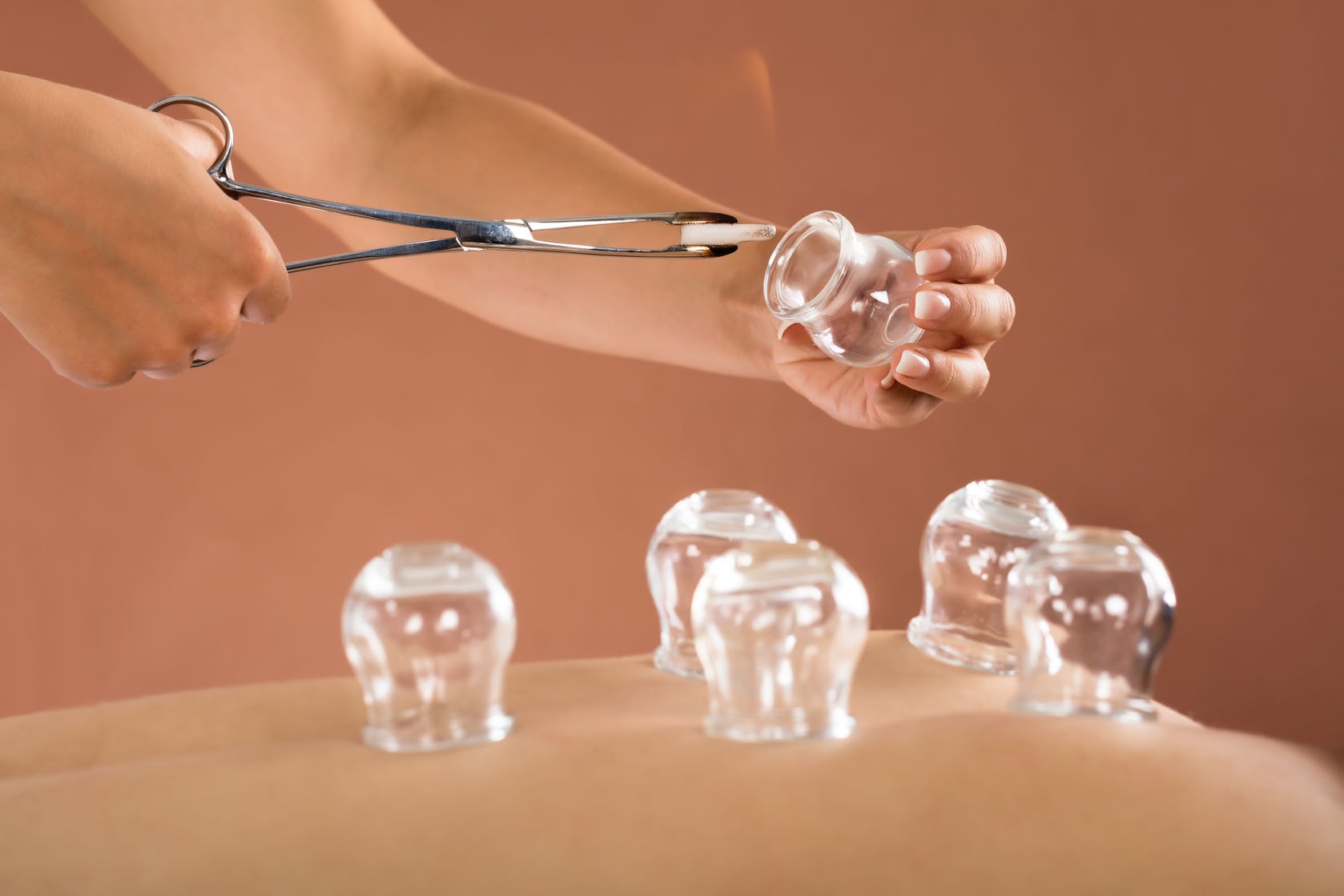
  • In cupping therapy, cups made of bamboo, pottery or glass are heated and attached to the skin by means of a heat vacuum, causing hyperemia and thus cure the diseases.
  • In ancient times, cupping therapy was used for the surgical treatment of inflammation with pyogenesis and was later extended to tuberculosis, rheumatism, rheum, insomnia and others.
  • This therapy is simple and effective, hence being passed down from generation to generation, and is still popular today, even rousing interest among some foreigners
「cupping therapy」的圖片搜尋結果

Four Great Inventions

Four Great Inventions


Ancient China was a country of inventions and discoveries. Among its abundant brilliant scientific and technological achievements, the 'Four Great Inventions' had made enormous contributions to the development of civilizations of the whole

1. PAPER MAKING 
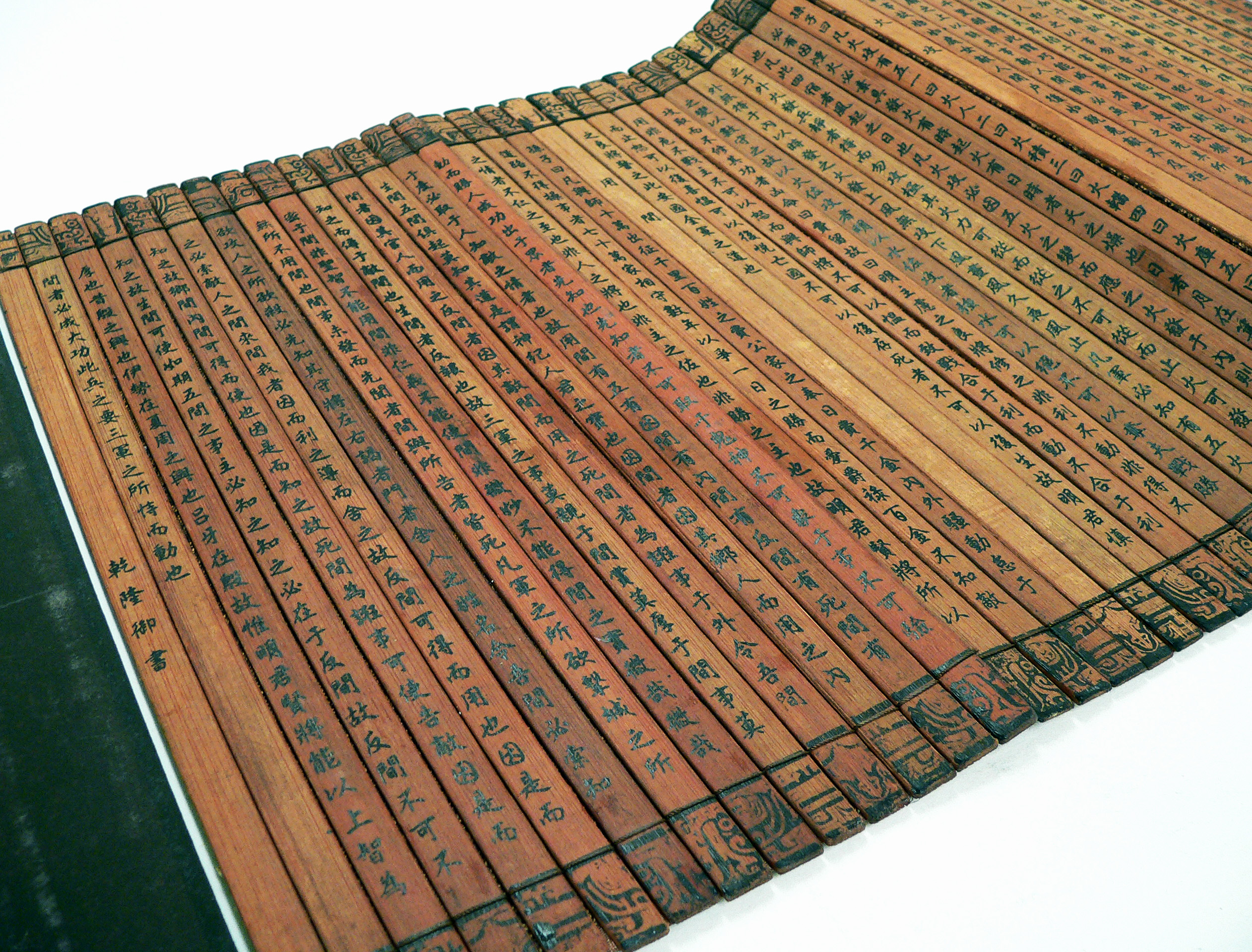
  • Before paper making technology was invented, people carved or wrote Chinese characters on tortoise shells, animals bones, bamboo slices, wooden plates and silk
  • Tortoise shells, animals bones and wooden plates are too heavy to use while silk fabrics are too expensive, so none was very practical.
  • Around the early period of the Western Han Dynasty (260 BC - 25 AD), people made paper from hemp and ramie, which was rough and not suitable for writing.
  • During Eastern Han Dynasty (25 - 220 AD), Cai Lun improved the technique after years of experimentation. 
  • He used various plant fibers such as bark, hemp, rags and torn fishing nets as raw materials to produce high quality paper. 
  • People call the paper that he invented as Cai Hou's paper because Cai Lun was bestowed the tittle of Longting Hou (Longting Marquis)
  • Cai Hou's paper was cheap, easily available and suitable for writing on.
  • Its emergence marked the beginning of paper replacing jian and bo ( one type of writing instrument before the invention of Cai Hou's paper). 
  • Jian is bamboo slices used to write on and bo is a general term of silk products.
  • China's paper making technology spread to the Korean Peninsula, Vietnam and Japan in the late Sui (581 - 618 AD) and early Tang (618 - 907 AD) Dynasties, later to the Arabian area in the 8th century, and to Europe through the Arabians.
  • The invention of paper greatly facilitated information and storage and cultural spread and exchanges, and thus had an epochal significance in promoting the development of human civilizations
「paper makingin China」的圖片搜尋結果「paper makingin China」的圖片搜尋結果

2. GUN POWDER
  • The formula of gun powder was first discovered by Taoist alchemists of ancient China while trying to make pills to achieve immortality.
  • Later, people made black gun powder with niter, sulfur and charcoal of certain proportions on the basis of the formula.
  • Books of the middle Tang Dynasty (618 - 907 AD) recorded the method of producing this kind of gun powder. 
  • It was first used to make firecrackers and fireworks and then in military affairs in the late Tang Dynasty.
  • In the Northern Song Dynasty (960 - 1127 AD), gun powder based weapons such as rockets and cannons were widely used.
「GUN POWDER In China」的圖片搜尋結果


3. COMPASS
  • As early as in the Warring States Period (475 - 221 BC), Chinese discovered that a magnet could indicate south and north, and on the basis of this feature, made a southward-pointing instrument that was the prototype of the compass. 
  • The instrument comprised a smooth magnetic spoon and a copper plate carved with directions; the handle of the spoon points south.  I
  • n the Song Dynasty, such prototype evolved into a southward-pointing fish and a southward-pointing needle. 
  • A southward-point fish was a magnetized fish-shaped thin icon slice, whose head would point southward when it floated on the surface of water.
  • A southward-pointing needle was a magnetized steel needle, which was able to indicate directions when it was placed on such smooth surfaces as water, nails or a bowl or hung in the windless air.
  • In the Song Dynasty, the compass was spread to Arabia and was affectionately called 'the Eye of Sailors'.
  • Around 1180, the compass was introduced into Europe via Arabia. The invention of the compass pushed forward the rapid development of navigation, making it possible for Zheng He to make his seven voyages across seas to Southeast Asia and around the Indian Ocean in the early Ming Dynasty (1368 - 1644 AD), Christopher Columbus to discover the New World, and Ferdinand Magellan to sail around the world and facilitated the startup of European colonies and the establishment of world markets.
「compass In China」的圖片搜尋結果「compass In China」的圖片搜尋結果


4. MOVABLE-TYPE PRINTING
  • Before printing techniques was introduced, a scholar had to copy characters one by one if he wanted get a new book. 
  • In the Sui and Tang Dynasties, block technology was invented which improved the speed of printing.
  • In block technology, Chinese characters were engraved on a wooden plate and coated with Chinese ink and the covered with paper to print.
  • Block technology sped up the printing of books, but was still impractical because engraving blocks was time-consuming, such blocks could not be easily preserved and misplaced would not be easily corrected.
  • During the Northern Song Dynasty, Bi Sheng finally invented movable-type printing.
  • He engraved the characters could be repeatedly used for the type setting and printing of different printed sheets.
  • This method was both economical and time saving, ushering in a new age of printing. 
  • In the development afterwards, clay used to make movable types were replaced with tin, wood, copper, lead and so on.
  • Mankind had been using Bi Sheng's movable-type print until the emergence of the electronic typeset system in the 20th century
  • China's movable-type printing first spread eastward into Korean and Japan and then westward into Persia and Egypt and at last across the world.
  • The invention of printing greatly sped up the development of exchanges between cultures of all the countries throughout the world.
「movable type printing in ancient china」的圖片搜尋結果相關圖片

Chinese Knotting

Chinese Knotting


At the beginning, the practice of tying knots proceeded from production and daily life needs. The typing of knots was a laboring skill, such as in tying objects and weaving fishing nets; meanwhile, it was a method for assisting memory. Before the invention of characters or letters, people represent different things using knots of varying sizes and shapes.

The well-developed knotting skills of ancient China were directly related to the extensive use of knots in people's daily life. Traditional Chinese costumes are mainly tied with belts and the wearing of jade ornaments has been popular in the Chinese society; these two have also help to improve the development of knotting skills. In addition, many articles of everyday use, such as window curtains, bed curtains, flutes, sachets, tobacco bags and fans, have to be fixed or decorated with knots, or kept contained with knots. Therefore, Chinese knotting was an important skill that Chinese women required to grasp in ancient times, and some related customs were even formed. For example, before Duanwu Festival, women knitted many 'longevity plaits' with five-coloured threads and presented them to relatives and friends on the Festival. It is said that such plaits tied to one's wrists could prevent wicked things and diseases.

相關圖片

Chinese knotting is different from the knotting methods of other ethnic groups mainly in the following aspects:-
  • Chinese knots are woven with one single strand
  • Tight and complicated in structure
  • Do not become loose easily
  • Very practical in use
  • Symmetrical with both left and right sides and front and 
  • Symmetrical with both front and reverse sides
  • Confirming to the traditional Chinese habit and aesthetic view of decoration
  • Weaving methods of many basic knots can be combined together to indicate strong changeability and decorative
Chinese knots have a wide range of patterns, including true love knots, panchang knots, wanzi knots and wintersweet knots. These patterns are not only exquisite and beautiful, but also carry auspicious and celebrative meanings. One example is true love knots which use two coloured strands tangled together. In the weedings of ancient times, true love knots were used in many ceremonies between bride and bridegroom. True love knots are often used to express love. It said that Su Xiaoxiao, a beauty of the Qi Dynasty (479-502 AD), once came across a man and fell in love with him while taking a ride outdoors. She wrote a poem to express her eelings, writing "Where to make our truelove knots? "

In the 1980s and 1990s, Chinese knots were in vogue both in China and among overseas Chinese, thus becoming craft works full of the characteristics of Chinese culture.

Ancient Chinese Calendar and 24 Seasonal Division Points

Ancient Chinese Calendar and 24 Seasonal Division Points


ANCIENT CHINESE CALENDAR
'Calendar' was the core of ancient astronomy of China and the rudiments of the Chinese calendar was in the Xia Dynasty. The establishment of 'Taichu Calendar' during the reign of Emperor Wudi of Han marked the emergence of the first complete calendar of China. In 1280, the 'Shoushi Calendar' which was made by Guo Shoujing of Yuan Dynasty showcased the summit of the development of the traditional Chinese calendar and was spread and used for more than 360 years. In the 'Shoushi Calendar', a tropical year is 365.2425 days long, which is same as the Gregorian Calendar commonly used in today's world, with only a 26 second error compared with the real time the earth takes to revolve around the sun.

Traditional Chinese calendar is directly related to agricultural production, hence is also known as 'Nong Li'. 'Nong Li' is a literally agricultural calendar which is commonly known as a lunar calendar. It is regulated that a non-leap year contains 12 months with a larger month consisting of 30 days and a smaller one of 29 day. The whole year has 364 or 365 days (the order of the larger and smaller months changes each year). Because each year is about 11 days shorter than a tropical year, 7 leap months are established every 19 years. The added months are called a 'leap month' and the year which contains a leap month is known as a 'leap year'. A leap year has 13 months, totaling 383 or 384 days. This traditional calendar of China is still in use today. Some traditional festivals including the Spring Festival, Dragon Boat Festival and the Mid-autumn Festival are calculated and determined by the traditional Chinese Lunar Calendar.

相關圖片

24 SEASONAL DIVISION POINTS
For the convenient arrangement of agricultural production, ancient Chinese had also created 24 seasonal division points. The 24 seasonal division points indicate 24 different positions of the earth as it revolves around the sun in its annual motion, and is able to satisfactorily indicate the change of seasons and climate. So, the 24 seasonal division points have not only an astronomic significance but play an important role in guiding agricultural production as well.

As early as in the Warring States period, a complete system of 24 seasonal division points had been formed. Starting with Winter Solstice, one seasonal division divisional point will lasts for about 15 days.

24 seasonal division points are listed as below:-
  1. Beginning of Spring
  2. Rain Water
  3. Waking of Insects
  4. Vernal Equinox
  5. Pure Brightness
  6. Grain Rain
  7. Beginning of Summer
  8. Grain Budding
  9. Grain in Ear
  10. Summer Solstice
  11. Sight Heat
  12. Great Heat
  13. Beginning of Autumn
  14. Limit of Heat
  15. White Dew
  16. Autumnal Equinox
  17. Cold Dew
  18. Frost's Descent
  19. Beginning of Winter
  20. Slight Snow
  21. Great Snow
  22. Winter Solstice
  23. Slight Cold 
  24. Great Cold 
24 seasonal division indicate the changes of climate, agricultural activities and natural phenomena in the drainage of the Yellow River throughout the year.

For instance, the Waking of Insects indicates that the snakes and insects have awakened from their dormancy while Grain in Ear indicates that seeds are germinating. 

Besides, different seasonal division points are observed by different customs in China. For example, Chinese will celebrate Qing Ming Festival on the day of Pure Brightness.

Great Contributions to Mathematics

Great Contributions to Mathematics

The Mathematics of ancient China was famous for the accuracy of its calculations. In China, the rudiments of arithmetic can been seen in the Shang and Zhou Dynasties. during the Spring and Autumn Period and the the Waring States Period, the arithmetic of integers and fractions (with addition, subtraction, multiplication and division appearing in the same equation) had been fairly developed. The Mathematics of ancient China used chips as its computing device, employing a decimal numeration system to calculate. The development of this system has made a special contribution to the development of human civilizations.


相關圖片
Chips that were used as counting tool in ancient China Mathematics


DECIMAL SYSTEM

The Chinese invented a 'decimal' numeration system in the Shang Dynasty at the latest. Among the characters on pottery, tortoise shells and animal bones of the Shang Dynasty, we can find that people at that time had already used 13 numbers, namely one, two, three, four. five, six, seven, eight, nine, ten, hundred, thousand and teh=n thousand to numerate any natural number. This was the most advanced and the most reasonable numeration system in the ancient times and had play an immeasurable role to the development of world science and culture.

CHINESE MULTIPLICATION TABLE
The Chinese multiplication table emerging in the Spring and Autumn Period is a perfect combination of the advanced decimal numeration system and Chinese language. As an important method for the popularization and development of Mathematics, it is still in use today. The difference between today's Chinese multiplication table and that of ancient times is that the table of old times started with '9 X 9 = 81' and ended at ' 2 X 2 = 4' while today's table from ' 1 X 1 = 1' to '9 X 9 = 81'.

CIRCUMFERENCE AND DIAMETER OF A CIRCLE

In 263 AD, Liu Hui, a Mathematician invented the division of a circle. He was the first to apply the thought of limits into Mathematical problems and worked out the approximate value of pi as 3.1416. Based Liu Hui's calculation, Zu Chongzhi of the Southern and Northern Dynasties carried out complicated computations concluding that the value of pi falls between 3.1415926 and 3.1415927; that was the most accurate value of pi in the world at that time. Zu took a leading position for advanced in the world and not until more than 1000 year later did the Western scientists catch up to and surpass the achievements of Zu Chongzhi. For the memory of Zu Chongzhi, people call the approximate value that Zu had worked out as 'Zu Chongzhi Ratio'.

相關圖片
Picture of Zu Chongzhi

THE NINE CHAPTERS ON THE MATHEMATICAL ART
The Nine Chapters on Mathematical Art was completed around the first century or so which exerts a very profound influence on the development of Mathematics in ancient China. The book lays out an approach to Mathematics that centers on finding the most general methods of solving practical problems, collecting 246 problems and classifying them into nine chapters. It touches on arithmetic, algebra, geometry and so forth and its records of the solving of multi-variable linear equation group is the earliest in the world which is more than 400 years earlier than in India and more than 1300 years earlier than in Europe. Moreover, its concept of fractions and their operation, its concepts of positive and negative numbers and related addition and subtraction rules, its operation of square roots and its solving of quadratic equations are also the earliest records in the history of Mathematics in the world.

The Nine Chapters on Mathematical Art is one of the world's most recognized Mathematical classics and its emergence marked the preliminary formation of the Mathematical system in China. This book was spread into the Korean Peninsular and Japan as early as in the Sui and Tang Dynasties and now it has been translated into several languages.

相關圖片相關圖片

Abacus and Calculation with an Abacus

Abacus and Calculation with an Abacus


The abacus was a great invention of the laboring people of ancient China. With its simple structure and quick computing method, it is praised as 'the most ancient calculator in the world'.

The abacus was invented on the basis that Chinese used that the counting-rod for a long period. In ancient times, people used small rods to count. Later, with development of productivity and commodity economy, the amount requiring calculation was greater and calculation with counting-rods was limited. Thus, people invented a more advanced counter - the abacus

The abacus is rectangular with a wooden frame on the four sides and small rods fixed inside stringing wooden beads; a beam across the middle separates the abacus into two parts: each rod has two beads on its upper deck, each representing one. The extant abacuses vary in shape; the most commonly seen have two beads in the upper part and five in the lower parts. Moreover, some have one bead in the upper part and five beads in the lower part or one bead in the upper part and four beads in the lower part. Particularly, the Museum of Chinese History houses an abacus from the Qing Dynasty which was excavated in Guangdong and has two beads in the upper part and six beads in the lower part. Such a style of abacus is seldom seen.

Calculation done by way of the abacus is called 'abacus calculation'. Abacus calculation has its own rules of 'addition, subtraction, multiplication and division' which are called the rules of abacus calculation in general. For ordinary counting, skillful abacus calculation is not inferior to computer, especially in additive and subtractive calculation. After abacuses replaced counting chips and became the major counting devices of the Chinese society in the Ming Dynasty (1368-1644 AD), their use had played an immeasurable role in accelerating economic development and pushing forward scientific and technological progress. Furthermore, the abacus gradually spread into Korea, Japan, America, Singapore, Malaysia and other countries and regions becoming an important component of world culture.

With the rapid development of electronic calculators, abacuses gradually lose their calculating role in social life and production, but the abacus-based mental arithmetic which is based on traditional abacuses have been given much importance because of its unique function in intelligence development.

「abacus」的圖片搜尋結果

Unique Tradition Chinese Medical Science

Unique Tradition Chinese Medical Science

Traditional Chinese medicine is a systematic science which is particularly concerned with wholeness and carries a unique theory. Its theoretic system was largely formed in the Spring and Autumn Period and the Warring States Period and was constantly developed and improved afterwards. It is not only a precious piece of legacy in the history of Chinese culture but has made enormous contributions to the development of world of medicine.

Traditional Chinese medicine views the human body as a part of nature as a whole. In treatment, it not only takes into account the human body itself but pays much attention to the relations of diseases to the patient's psychology and living habits and to the outside environment, especially to climatic changes and then carries out all-round analysis and treatment in reference to the causes and symptoms of the diseases of the patient. 

The Canon of Medicine of the Yellow Emperor which occurred in the Warring States Period, is the earliest extant medical experience in and before the Spring and Autumn and the Warring State periods (770-221 BC), laying a theoretical foundation for traditional Chinese medical science. The Febrile and other Diseases which was written by Zhang Zhongjing, a renowned doctor of the Eastern Han Dynasty, is one of the most influential works in the history of traditional Chinese medicine. Hua Tuo, a reputed doctor of the Eastern Han Dynasty was the first in world to use anesthetic (Mafeisan) in surgery and was called the 'founder of surgery'

THE TRADITIONAL DIAGNOSING METHODS OF CHINESE MEDICINE

相關圖片

1. Observation
  • To observe the appearance of the patient
  • Example : His countenance and the sign of his vigor or lack of vigor
2. Auscultation and olfaction
  • Listening to the sounds and smells let out by the patient
3. Interrogation
  • To enquire about the course of disease and the status quo of the patient
4. Pulse feeling and palpation
  • Involve inspection of the patient's pulse
  • Bian Que, a famous doctor of the Warring States Period who is reputed to be the 'founder of Chinese medicine' was especially good at it
  • The application of pulse feeling and palpation indicates that the physicians of ancient China had grasped the relationships between pulse and each part of human body.
TRADITIONAL CHINESE MEDICINE
Traditional Chinese medicine mainly come from plants, animals and minerals. These medicines not only enrich the world medical system, but are widely used in the field of regimen and cosmetology. There were many monographs about medicines and prescriptions in ancient China. For example, the Essential Formulas for Emergencies [Worth] a thousand Pieces of Gold compiled by Sun Simiao of the Tang Dynasty collects more than 6500 prescriptions and has been praised as an 'encyclopedia of clinical medicine' and the Compendium of Materia Medica written by Li Shizhen of the Ming Dynasty (1368-1644 AD) includes 1892 medicines, 1109 illustrations and 11096 prescriptions, quite deserving to be called a complete collection of medicines in the ancient world.

相關圖片
Chinese Traditional Medicine

The Origin and Evolution of Chinese Characters

The Origin and Evolution of Chinese Characters

Chinese characters constitute one of mankind's oldest systems of scripts in the world. Total Chinese characters are more than 80000 which are consisting up to 3500 commonly used and convey 99% of social information.

「汉字的演变」的圖片搜尋結果

THE EVOLUTION OF CHINESE CHARACTERS
Chinese characters originate from pictures and pictographic signs in primitive society which were created and summarized step by step over a long period of labor and pratice by the ancestors. Through evolvement, mature jiaguwen (oracle scripts or Chinese scripts carved on tortoise shells or animal bones) appeared in the Shang Dynasty 3000 years ago at the least.

1. Jiaguwen

  • Jiaguwen are Chinese scripts carved on tortoise shells or animal bones, mainly during the Shang Dynasty (17th - 11th BC). 
  • Jiaguwen have regular strokes and beautiful form, which is evidence that they had undergone a long development process and that there should be certain rudiments preexisting jiaguwen.
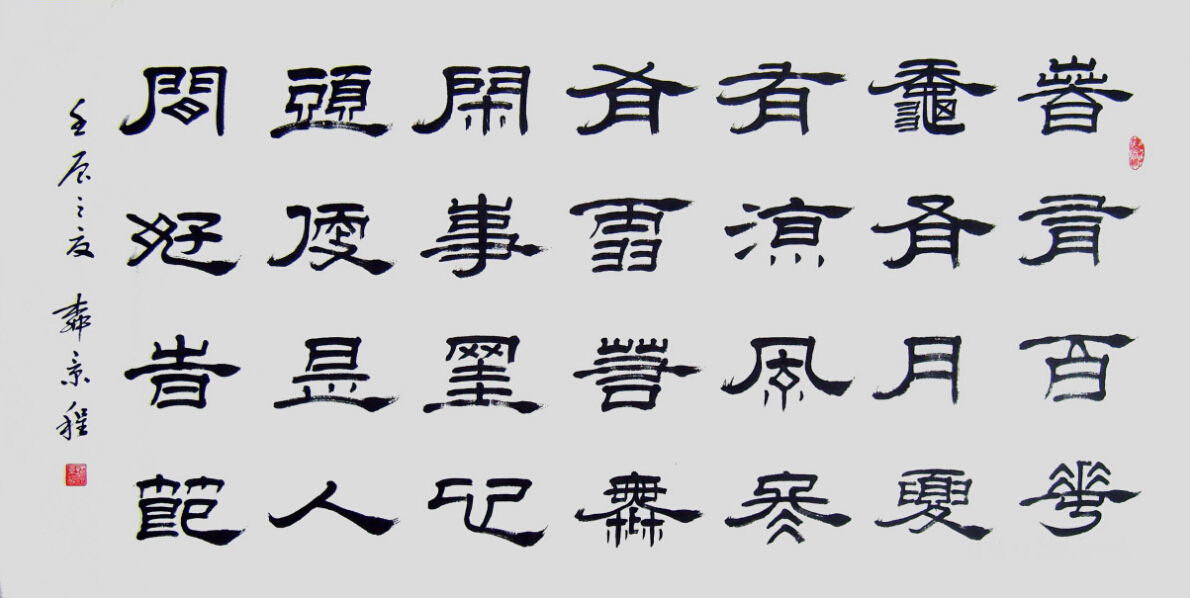
  • From jiaguwen to the current simplified Chinese characters, Chinese characters have experienced a course of evolution from hieroglyph to abstraction and from complexity to simplicity, evolving from jiaguwen to jinwen (ancient Chinese script used in inscriptions on ancient bronze objects), zhuanshu (seal characters), lishu (official script) and kaishu (regular script) as well as caoshu (cursive script) and xingshu (semi-cursive script)
相關圖片

2. Jinwen
  • Jinwen also known as 'zhonhgdingwen'. are script forged or carved on bronze ware in ancient times and their forms are fuller, rounder, more upright, more squared and better balanced in structure compared with jiaguwen. Jinwen existed in Shang, Zhou, Qin and Han dynasties.


3. Zhuanshu

  • Zhuanshu can be divided into dazhuan (large seal script) and xiaozhuan (small seal script).
  • Dazhuan also called zhouwen, usually refers to the script of the State of Qin during the Spring and Autumn Period and the Warring States Period, and the most typical dazhuan was shiguwen; xiaozhuan was a result of simplified dazhuan, but was better balanced in structure and more rgular, with simplified, rounder and smoother strokes.


4. Lishu
  • Lishu can be divided into Qin li and Han li. Qin li was used in the Qin Dynasty. 
  • Han Li also known as 'present li' was derived from Qin li and commonly used in the Han Dynasty.
  • Compared with Qin li, Han li had fewer traces of zhuanshu.
「隶书」的圖片搜尋結果

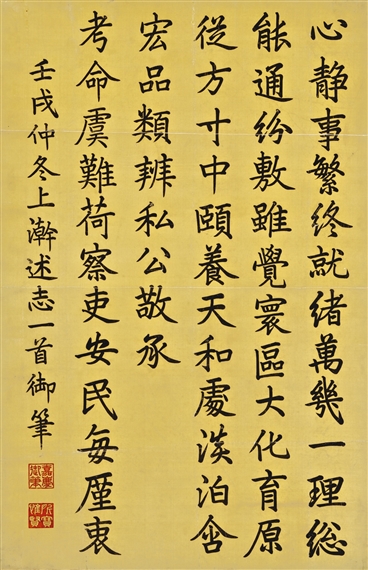
5. Kaishu
  • Kaishu was developed on the basis of lishu, first appearing in the late Han Dynasty and most popular in the Wei and Jin Dynasties.
  • Being egular and square in forms and simple in writing, it is still in use today.
  • It is a standard script that has been used for the longest duration.
「kaishu」的圖片搜尋結果

Jiaguwen, jinwen, zhuanshu, lishu and kaishu were or are scripts formally used in certain periods of history while caoshu and xingshu have been auxiliary ones all the time. Caoshu features in general continuous or omitted strokes. Xingshu originated in the late Eastern Han Dynasty and is a kind of script between kaishu and caoshu. Despite of its continuous strokes, it is easy to write and read and thus very practical.

Calligraphy

Calligraphy

Calligraphy is the traditional art of writing Chinese characters. Calligraphic arts are based on the square structure and lines of Chinese characters. The Chinese people embodied their philosophy of the beauty of shapes into the invention of Chinese characters. With balanced structure and smooth, clean and changeable form, each Chinese character evokes a sense of artistry. 

Calligraphic works pay more attention to the structures of script types; for example, the component parts, size and spacing of a Chinese character should be harmonious and natural and the spaces between words and lines should also be carefully arranged. Another notable characteristic of Chinese calligraphy is the use of brush pens and Chinese ink. Brush pens are soft and elastic; in writing, the thickness and thinness of the tip of brush pens and the ink can present artistic features.

Common styles of Chinese calligraphy include seal, official, regular, cursive and semi-cursive (running) scripts. Different calligraphic styles have varying structural, features round and smooth lines that retain the same width, showcasing the aesthetic effect through calligraphic curviness; the strokes of lishu script are undulate and vary markedly in width and strength; regular script is square and neat; cursive script has continuous, dance-like strokes and is thus lively and vigorous; the word 'running' in 'running script' suggests 'speediness', so semi-cursive script is not as neat as regular script, nor is it so illegible as cursive script, presenting a sort of convenient handwriting. Among all these scripts, regular script and semi-cursive script are the most frequently used and regular script is the very foundation of the exercise of calligraphy.

Each master, after years of hard practice, formed a unique calligraphic style and school to raise the profile of Chinese calligraphy to a towering level. There is some famous calligraphers in the history of China:-

  • Zhong Yao (There Kingdoms Period)
  • Wang Xizhi ( Eastern Jin Dynasty)
  • Ouyang Xun (Tang Dynasty)
  • Huaisu (Tang Dynasty)
  • Yan Zhenqing (Tang Dynasty)
  • Liu Gongquan (Tang Dynasty)
  • Su Shi (Song Dynasty)
  • Zhao Ji, The Emperor of Huizong(Song Dynasty)

「a cursive script by huai su」的圖片搜尋結果
A cursive script by Huai Su
「the original handwriting of The Preface to Lanting」的圖片搜尋結果
The original handwriting of The Preface to Lanting

Xiangqi (Chinese Chess) and Weiqi (Go)

Xiangqi (Chinese Chess) and Weiqi (Go)


Xiangqi (Chinese Chess) originated in China and the name 'xiangqi' dates back the Warring States Period more than 2000 years ago, although at that time xiangqi was quite different from today. Since that early time it has been a popular game among the high rank of society.

In the middle of a chessboard there is a border separating the two sides, which is called the 'River-Border' or the 'Chuhe River and Han Border'. This name may stem from the legend that Chinese chess was invented by Han Xin, a strategist living in the period when Chu and Han were at war against each other. It is said that Han Xin invented xiangqi to teach his men the art of war during their leisure time. The xiangqi with the 'River-Border' known today first appeared in the Northern Song Dynasty and the one without the River-Border belonged to its predecessor.

On the chessboard of xiangqi, 9 parallel vertical and 10 parallel horizontal lines intersect with each other, forming 90 intersections, where the chess pieces of xiangqi are placed. The places with slant lines at the points are called 'jiugong'. There are altogether 32 chess pieces, which are divided into two groups. Characters carved on the pieces are painted red or black to represent the two sides. Each side has a 'marshal' or a 'general', two 'guards', two 'elephants', two 'horses', two 'chariots', two 'cannons' and five 'soldiers'. At the start of a match, all pieces must be placed in fixed positions, and the red side moves first. Each piece has its unique move, for example, a 'horse' moves diagonally from one position to another, a move which is traditionally described as being like the Chinese character 日(ri in pinyin), a 'elephant' may move orthogonally and is limited to nine positions in the middle part at the bottom, which forms a pattern of the Chinese character 田 (tian in pinyin), a chariot can move any distance orthogonally so long it does not jump over intervening pieces, and a 'soldier' can move forward only.

When the 'general' or 'marshal' of one side is checked and might be eaten off in next move, it called 'jiangjun' or simply 'jiang'. When the side that is checked finds no way to save himself, he has been checkmated. In another case, one side finds no way to move his 'general' or 'marshal' although he is not checked by other side, and nor can he any remaining chessman, then he has also lost. Sometimes no side wins, ending the game in a stalemate.

WEIQI (GO)

「weiqi」的圖片搜尋結果

Weiqi (go) orginisated in China. It appeared earlier than Chinese chess, and could date back at least 2500 years. Go is the earliest form of chess in the world. In ancient days, it was a favorite game both of rulers and ordinary people. The board is marked with 19 parallel horizontal lines and 19 parallel vertical lines, forming 361 intersectiona upon which stones are placed. Each of two sides, one with black stones and the other with white stones, possesses 180 of them. It is an intense and ever-changing game. Players must resort to a variety of tactics in order to defeat their opponent. Tactics used in the game are so variable and complex that ancient Chinese said in an exaggerated manner that the inventors of go must have been deities. In the Tang Dynasty, there was a famous player named Wang Jixin, whose skill in playing go was extraordinary to such a degree that it was said he had once been instructed by a deity.

Weiqi is a strategic game. With simple rules and enormous possibilities, it features the myriads of changes, more complicated and profound than other styles of chess. That is where the charm of weiqi lies. The playing of weiqi is greatly helpful in improving one's brain power, increasing his calculation skills, as well as the ability in creation, thinking and judgment. It also helps to develop one's willpower and composure. The playing of weiqi can play a positive role in children's intelligence development and enhance their analytical ability.

Go was introduced into Japan during the Sui (581-618 AD) and Tang (618-907 AD) Dynasties and into Europe in the 19th century. Today, this game is played in many countries and regions, and players from China, Japan and South Korea are of the highest skill in the world.

Four Treasures of Study in Ancient China

Four Treasures of Study in Ancient China


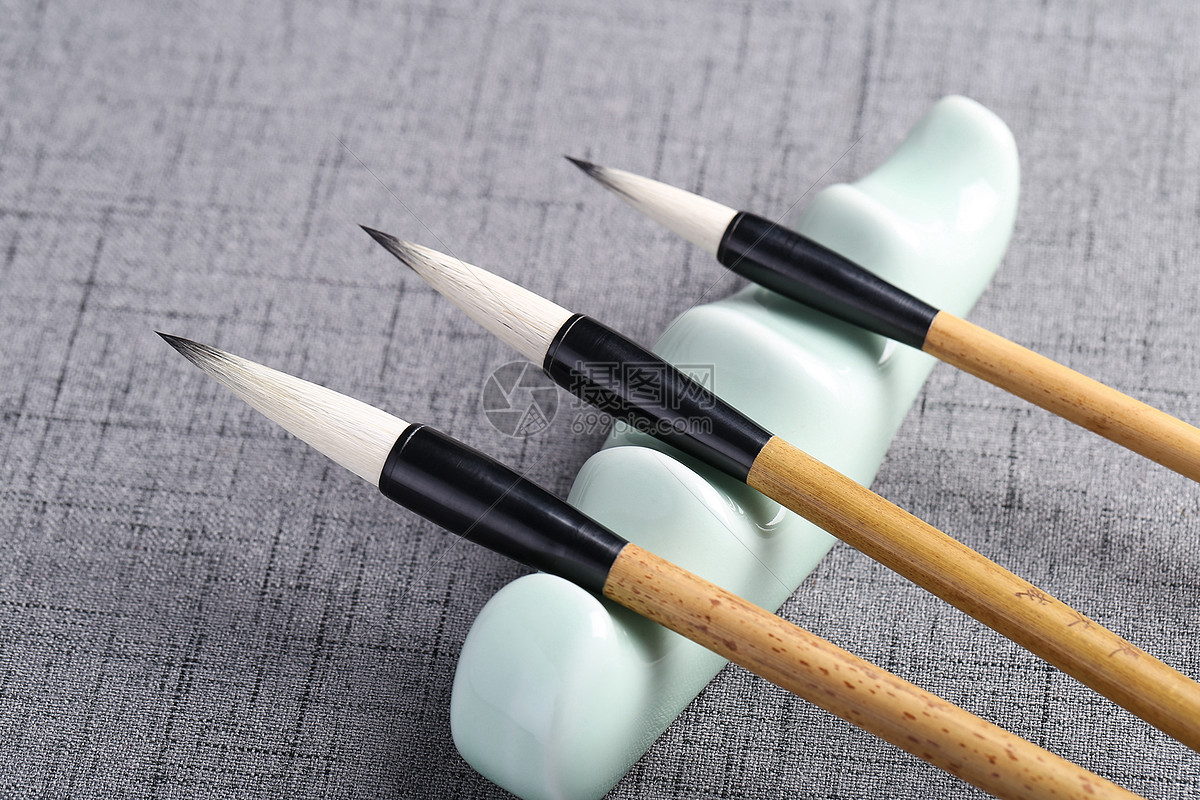
In ancient China, brush pens, Chinese ink, paper and ink stone were four necessary tools in writing or painting. In the Song Dynasty, the began to be called ''four treasures of study''. They are stationary for practical uses, but as exquisite products, they can often be viewed as craft works and listed into the collection. The ''four treasures of study'' have a great number of varieties, and the best-known ones are Chinese brush of Huzhou, ink stick of Anhui, paper of Xuancheng and ink stone of Duanzhou.

1. Brush pen
Brush pens have the longest history among the ''four treasures of study'' and are made primarily of small bamboo pipes and hair from beasts. Those made of the hair of goats, hares and weasels are most commonly seen, and are respectively called ''yanghao'' (goats' hair), ''tuhao'' (hares' hair) and ''langhao'' (weasels' hair). Brush pens manufactured in Huzhou of Zhejiang Province are made of carefully selected hair and the tips of the pens are prefectly round and even. Therefore, they are flexible and springy in use.

相關圖片


2. Chinese Ink
Chinese ink sticks are typically made of the soot of pines. When producing pine soot ink, pine wood is lit but prevented from fully burning. In this way, it will emit black soot which later turns into very tiny black powder after it cools down. The ink sticks produced in Shexian County of Anhui Provinece have enjoyed a good reputation since the Tang and Song Dynasties. The top quality pine wood and spring water in this area provide the best raw materials for the production of Chinese ink sticks. The ink stick of Anhui is hard and emits fragrance and feels smooth in writing.

「中国墨汁」的圖片搜尋結果


3. Xuan Paper
Xuan paper is produced in Jingxian County of Anhui and other places. Xuan paper is white, refined, even, soft, resilient and absorbent and does not change in color. As the material of writing and painting. Xuan paper is more age-resistant than silk and can be preserved for a long time without fading in colour. Many ancient calligraphic works and traditional Chinese paintings, including the Five Oxen painted by Han Huang of the Tang Dynasty and housed by the Imperial Palace Museum of Beijing, have been painted on Xuan paper. It deserves its reputation of ''endurance for thousands of years".
「宣纸」的圖片搜尋結果

4. Ink Stone
As tools for grinding ink sticks, ink stones are made of jade, raw lacquer, pottery, stones, copper, iron and so on and mainly of stones. In China, there are four most famous kinds of ink stones, namely Duan ink stones, She ink stones, Tao ink stones and Chengni ink stones. The former three are made of stones and the last is made of pottery. Duan ink stones are produced in Zhaoqing, Guangdong Province. They have abundent textures, feel warm and moist like jade and do not harm the hair of brush pens and the ink ground with them does not easily dry up. She ink stones are produced in Shexian County, Anhui, appearing beautiful and elegant in shape.

Four Great Classical Novels

Four Great Classical Novels

Literary creation flourished during the Ming and Qing dynasties and it was in this period that the four great Chinese classical novels were written, namely the Romance of Three Kingdoms, the Outlaws of the Marsh, the Journey to the West and A Dream of Red Mansions.

相關圖片

1. The Romance of Three Kingdoms
The Romance of the Three Kingdoms was originally named as the Popular Historical Novel Bansed on a Folk Version of the Records of The Three Kingdoms, is a renowned historical novel. Luo Guanzhong, the author of this book, based his novel on both folk tales and historical records of the conflicts between the kingdoms of Wei, Shu and Wu (220-235), established by Cao Cao, Liu Bei and Sun Quan respectively. Written in the early Ming Dynasty, it was the first historical novel in the form of captioned chapters to appear in China. In the novel, the author successfully created a number of impressive characters with varying dispositions, such as Zhuge Liang (a superb strategist), Cao Cao (the cunning and suspicious), Guan Yu (loyal and brave), Zhang Fei (rash and reckless) and etc.


2. The Outlaws of the Marsh
The Outlaws of the Marsh which occurred almost at the same time as the Romance of the Three Kingdoms, was written by Shi Nai'an. It is based on the folk tales following a band of rebels led by Song Jiang at the close of the Northern Song Dynasty. The novel is themed with 'mass revolts caused by oppressive officials'. It describes 108 heroes and heroines, discloses official corruption and feudal oppression and eulogizes the daring deeds of the heroes and heroines who eliminated tyrants and appeased kind people.


3. The Journey to the West
The Journey to the West was authored by Wu Cheng'en of the Ming Dynasty, is a mixture of the true story of a Tang Dynasty monk who made a perilous overland trip to India to fetch Buddhist scriptures and the pertinent folklore based on it. The novel tells how Sun Wukong (Monkey King) who once created a tremendous uproar in the Heaven Palace, escorts his master, the Monk of Tang to fetch Buddhist scriptures from the Western Heaven. According to the novel, they experienced 81 tests on the journey before finally obtaining the authentic scriptures. The novel features rich imagination, wonderful stories and vivid language. It is a renowned mythic full-length novel of China.

相關圖片


4. A Dream of Red Mansions
A Dream of Red Mansions also named as A Tale of the Rock has 120 chapters. The first 80 chapters were written by Cao Xueqin and the remaining 40 chapters were written by Gao E. With the tragic love story of Jia Baoyu and Lin Daiyu as the main theme, the novel describes the decline of four feudal noble families especially the Jia family. The novel discloses the illness of feudal rulers and reveals the doomed fate of feudal dynasties. It is the best paragon for the combination of artistic accomplishment and literary themes among all classical full-length novels in ancient China and a masterpiece of realistic literature of China.

相關圖片

The Four Great Classical Novels and other outstanding works during the period reflected the social reality of that time.

Sun Zi's Art of War

Sun Zi's Art of War


The Sun Zi's Art of War, also named Sun Zi, is a famous book of military science in ancient China, and also the first and earliest work of military science extant in the world as well. Its author, Sun Wu, was an outstanding strategists of the late Spring and Autumn Period.

Sun Wu was a native of the State of Qi and later moved to the State of Wu. At that time, all vassal states waged constant wars for hegemony and the society fell into turbulence. When he lived in the State of Wu, Sun Wu thought deeply the wars among the sates and summarized the regular pattern. Through his arduous effort, he finally finished The Sun Zi's Art of War.

Sun Wu presented his book to the ruler He Lǜ of Wu who appointed him as a senior general and entrusted him with the drill of the army of Wu. Sun Wu was a strict commander, earnest drilling the Wu's army. With his help, the State of Wu became a major military power in the Spring and Autumn Period.

The Sun Zi's Art of War consists of 13 chapters, amounting to more than 6000 characters. Sun Wu expounded his wide-ranging views on wars. He emphasized the importance of 'knowing yourself and knowing your enemy', 'attacking the enemy unexpectedly' and concentrating a superior force to thoroughly defeat the enemy. Sun Wu especially stressed the importance of using war only as a last resort because war was a grievous burden on the people.

More than 100 years later, during the Warring States Period, strategist Sun Bin inherited Sun Wu's military theory and wrote Sun Bin's Art of War.

The Sun Zi's Art of War has been translated into English, French, Japanese, German, Russian, Czech and other languages. Because it is deemed applicable to many of life's problems beyond warfare, and it enjoys high international prestige.

相關圖片            


THE 36 STRATAGEMS (ART OF WAR)
  1. Cross the sea without the emperor's knowledge
  2. Besiege Wei to rescue Zhao
  3. Kill with a borrowed knife
  4. Waiting at leisure while enemy labors
  5. Loot a burning house
  6. Make a sound in the east, then strike in the west
  7. Create something from nothing
  8. Openly repair the gallery roads but sneak through the passage of Chencang
  9. Watch the fires burning across the river
  10. Hide a knife behind a smile
  11. Sacrifice the plum tree to preserve the peach tree
  12. Take the opportunity to pilfer a goat
  13. Stomp the grass to scare the snake
  14. Borrow a corpse to resurrect the soul
  15. Lure the tiger off its mountain lair
  16. In order to capture, one must let loose
  17. Tossing out a brick to get a jade gem
  18. Defeat the enemy by capturing their chief
  19. Remove the firewood from under the pot
  20. Disturb the water and catch a fish
  21. Slough off the cicada's golden shell
  22. Shut the door to catch the thief
  23. Be friend a distant and strike a neighbouring one
  24. Obtain safe passage to conquer the State of Guo
  25. Replace the beams with rotten timbers
  26. Point at mulberry tree while cruising the locust tree
  27. Feign madness but keep your balance
  28. Remove the ladder when the enemy has ascended to the roof
  29. Deck the tree with false blossoms
  30. Make the host and the guest exchange roles
  31. The beauty trap (Honeypot)
  32. The empty fort strategy
  33. Let the enemy's own spy sow discord in the enemy's trust
  34. Inflict injury on oneself to win the enemy's trust
  35. Chain stratagems
  36. If all else fails, retreat


The Great Wall of China

The Great Wall of China


The origin of Great Wall dates back to the Spring and Autumn and Warring States periods around the 7th century BC. After the reunification of the country, Qinshihuang had the Great Walls in the previous Qin, Zhao and Yan states expanded and rebuilt, connecting them into a huge military defense work which extended more than 5000 km from Liaodong in the east to Lintao (within today's Gansu Province) in the west. Afterwards, many dynasties rebuilt and repaired the Great Wall. The early Ming Dynasty carried out a large-scale construction project of the Great Wall, which was largely completed about 200 years later. The eastern part of the Great Wall of the Ming Dynasty was mainly in a brick-stone structure.

Today's Great Wall starts with Yalu River in the east and ends at the Jiayu Pass in the west. Extanding through five provines (Liaoning, Hebei, Shaanxi, Shanxi and Gansu), two autonomous regions (Inner Mongolia and Ningxia) and one municipality directly under the central government (Beijing), it totals more tham 6700 km in length (about 13000 li), hence it is also called Ten Thousand Li Great Wall.

The Great Wall consists of a thousand passes, castles, battlements and high walls. In the event of an emergency, soldiers would kindle beacons on the beacon platforms along the northern side of the Great Wall,transferring the information to cities or towns nearby one by one and until the capital.

The Badaling, Mutianyu and Simatai sections of the Great Wall at Beijing were all built up in the Ming Dynasty. Built in conformity with mountains, these parts of the Great Wall are high and firm, wandering and undulating. On many parts of the Great Wall, five or six horsemen could ride side by side. These fully show the architectural style and grandeur of the Great Wall.

「八达岭长城」的圖片搜尋結果
Badaling sections of the Great Wall

The Great Wall is one of the most famous wonders in the world and was included into World Heritage List UNESCO in 1987.

Zhi Yuan (Chinese Traditional Kite)

Zhi Yuan (Chinese Traditional Kite)


It is said that in the Warring States Period (more than 2000 years ago), a philosopher named Mozi spent three years making a flying bird with bamboo and wood. A well-known ingenious carpenter, Lu Ban carried down this technique. The wooden bird that he made could fly for three days.

For the real origin of kite, experts on folklore hold that they might be invented when the ancient people flew kites on the Pure Brightness Festival (Qing Ming) to commemorate their dead relatives and friends. Kites were mostly used in military affairs in their early stage. According to history, a general of the Tang Dynasty was once besieged in a town. He ordered people to make a huge paper kite and hide a letter for help inside. When the kite was successfully flown, reinforcements arrived in time for the, to win the battle. In the Tang Dynasty, kites imitating the shapes of animals and plants and those emitting sounds emerged, and the major function of kite turned to entertainment. During the Five Dynasty Period (907-960 AD), a man named Li Ye placed a flute-like device on the kite to make more melodious sounds. In the Song and Yuan dynasties, kites were introduced into Tibet, Yunnan and northern China which are inhabited by the minority ethnics.

The renowed places producing kites in China today are Beijing, Tianjin, Nantong of Jiangsu Province and Yangjiang of Guangdong Province. In the process of making a kite, a frame is first made with bamboo strips and is then covered with paper or silk. The making of kites requires considerable skill, so does kit-flying: only in this way can kites fly freely and steadily in the sky. Folk craftsmen with great skill can makes kites in the shape of human figures, animal or auspicious designs. For example, a kite imitating the shape of a centipede is supposed to raise its head up when it flies in the sky, a dragon-shaped kite should be able to move to and fro and a kite in the shape of an eagle is expected to hover.

Chinese people like to fly kite in open fields in the spring. They can breath fresh air, exercise their bodies and lighten their hearts. Traditional Chinese medicine even holds that to walk with the upward when flying a kite is physically and psychologically beneficial sport and an interesting game, hanging a kite on a wall for decoration is apiece of craft work that pleases both the eye and mind.

In recent years, a large-scaled international kite festival has been held annually in Weifang of Shangdong Provience.

「Shandong Weifang International Kite Festival」的圖片搜尋結果
Shandong Weifang International Kite Festival

Cardio-Pulmonary Resuscitation (CPR) - Part 1: Introduction

Cardio-Pulmonary Resuscitation (CPR) - Part 1: Introduction CARDIO-PULMONARY RESUSCITATION (CPR) Cardio-Pulmonary Resuscitation (CPR...