Showing posts with label Arts and Sports. Show all posts

Thursday, March 14, 2019

Calligraphy

Calligraphy

Calligraphy is the traditional art of writing Chinese characters. Calligraphic arts are based on the square structure and lines of Chinese characters. The Chinese people embodied their philosophy of the beauty of shapes into the invention of Chinese characters. With balanced structure and smooth, clean and changeable form, each Chinese character evokes a sense of artistry. 

Calligraphic works pay more attention to the structures of script types; for example, the component parts, size and spacing of a Chinese character should be harmonious and natural and the spaces between words and lines should also be carefully arranged. Another notable characteristic of Chinese calligraphy is the use of brush pens and Chinese ink. Brush pens are soft and elastic; in writing, the thickness and thinness of the tip of brush pens and the ink can present artistic features.

Common styles of Chinese calligraphy include seal, official, regular, cursive and semi-cursive (running) scripts. Different calligraphic styles have varying structural, features round and smooth lines that retain the same width, showcasing the aesthetic effect through calligraphic curviness; the strokes of lishu script are undulate and vary markedly in width and strength; regular script is square and neat; cursive script has continuous, dance-like strokes and is thus lively and vigorous; the word 'running' in 'running script' suggests 'speediness', so semi-cursive script is not as neat as regular script, nor is it so illegible as cursive script, presenting a sort of convenient handwriting. Among all these scripts, regular script and semi-cursive script are the most frequently used and regular script is the very foundation of the exercise of calligraphy.

Each master, after years of hard practice, formed a unique calligraphic style and school to raise the profile of Chinese calligraphy to a towering level. There is some famous calligraphers in the history of China:-

  • Zhong Yao (There Kingdoms Period)
  • Wang Xizhi ( Eastern Jin Dynasty)
  • Ouyang Xun (Tang Dynasty)
  • Huaisu (Tang Dynasty)
  • Yan Zhenqing (Tang Dynasty)
  • Liu Gongquan (Tang Dynasty)
  • Su Shi (Song Dynasty)
  • Zhao Ji, The Emperor of Huizong(Song Dynasty)

「a cursive script by huai su」的圖片搜尋結果
A cursive script by Huai Su
「the original handwriting of The Preface to Lanting」的圖片搜尋結果
The original handwriting of The Preface to Lanting

Xiangqi (Chinese Chess) and Weiqi (Go)

Xiangqi (Chinese Chess) and Weiqi (Go)


Xiangqi (Chinese Chess) originated in China and the name 'xiangqi' dates back the Warring States Period more than 2000 years ago, although at that time xiangqi was quite different from today. Since that early time it has been a popular game among the high rank of society.

In the middle of a chessboard there is a border separating the two sides, which is called the 'River-Border' or the 'Chuhe River and Han Border'. This name may stem from the legend that Chinese chess was invented by Han Xin, a strategist living in the period when Chu and Han were at war against each other. It is said that Han Xin invented xiangqi to teach his men the art of war during their leisure time. The xiangqi with the 'River-Border' known today first appeared in the Northern Song Dynasty and the one without the River-Border belonged to its predecessor.

On the chessboard of xiangqi, 9 parallel vertical and 10 parallel horizontal lines intersect with each other, forming 90 intersections, where the chess pieces of xiangqi are placed. The places with slant lines at the points are called 'jiugong'. There are altogether 32 chess pieces, which are divided into two groups. Characters carved on the pieces are painted red or black to represent the two sides. Each side has a 'marshal' or a 'general', two 'guards', two 'elephants', two 'horses', two 'chariots', two 'cannons' and five 'soldiers'. At the start of a match, all pieces must be placed in fixed positions, and the red side moves first. Each piece has its unique move, for example, a 'horse' moves diagonally from one position to another, a move which is traditionally described as being like the Chinese character 日(ri in pinyin), a 'elephant' may move orthogonally and is limited to nine positions in the middle part at the bottom, which forms a pattern of the Chinese character 田 (tian in pinyin), a chariot can move any distance orthogonally so long it does not jump over intervening pieces, and a 'soldier' can move forward only.

When the 'general' or 'marshal' of one side is checked and might be eaten off in next move, it called 'jiangjun' or simply 'jiang'. When the side that is checked finds no way to save himself, he has been checkmated. In another case, one side finds no way to move his 'general' or 'marshal' although he is not checked by other side, and nor can he any remaining chessman, then he has also lost. Sometimes no side wins, ending the game in a stalemate.

WEIQI (GO)

「weiqi」的圖片搜尋結果

Weiqi (go) orginisated in China. It appeared earlier than Chinese chess, and could date back at least 2500 years. Go is the earliest form of chess in the world. In ancient days, it was a favorite game both of rulers and ordinary people. The board is marked with 19 parallel horizontal lines and 19 parallel vertical lines, forming 361 intersectiona upon which stones are placed. Each of two sides, one with black stones and the other with white stones, possesses 180 of them. It is an intense and ever-changing game. Players must resort to a variety of tactics in order to defeat their opponent. Tactics used in the game are so variable and complex that ancient Chinese said in an exaggerated manner that the inventors of go must have been deities. In the Tang Dynasty, there was a famous player named Wang Jixin, whose skill in playing go was extraordinary to such a degree that it was said he had once been instructed by a deity.

Weiqi is a strategic game. With simple rules and enormous possibilities, it features the myriads of changes, more complicated and profound than other styles of chess. That is where the charm of weiqi lies. The playing of weiqi is greatly helpful in improving one's brain power, increasing his calculation skills, as well as the ability in creation, thinking and judgment. It also helps to develop one's willpower and composure. The playing of weiqi can play a positive role in children's intelligence development and enhance their analytical ability.

Go was introduced into Japan during the Sui (581-618 AD) and Tang (618-907 AD) Dynasties and into Europe in the 19th century. Today, this game is played in many countries and regions, and players from China, Japan and South Korea are of the highest skill in the world.

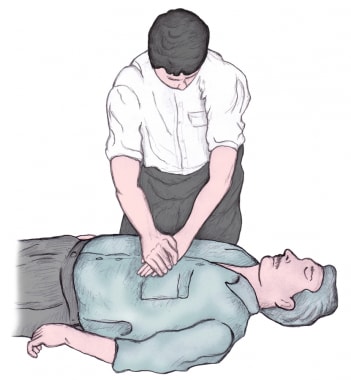
Cardio-Pulmonary Resuscitation (CPR) - Part 1: Introduction

Cardio-Pulmonary Resuscitation (CPR) - Part 1: Introduction CARDIO-PULMONARY RESUSCITATION (CPR) Cardio-Pulmonary Resuscitation (CPR...